Self Taught Web DeveloperEntrepreneurs who code
From Recruitment to Software Engineer
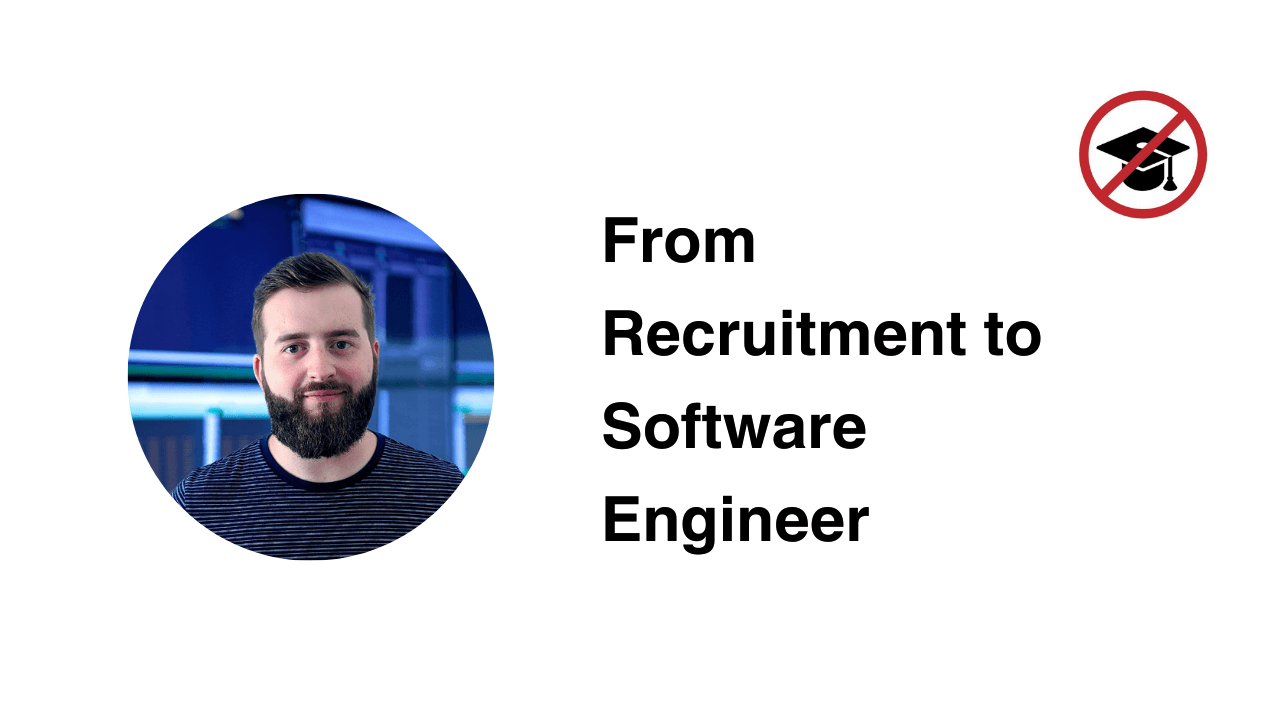
Cameron Blackwood changed career from recruitment to become a Software Engineer. He’s a self-taught developer and he joined us for an interview to share all his best tips for learning to code. Cameron also has a side hustle in finding microinfluencers for companies, which he discusses as well.
Hey, so can you introduce yourself?
I am Cameron Blackwood, I’m a software engineer, content creator and entrepreneur, and live in Edinburgh, Scotland, in the UK.
Why did you learn to code?
After spending three years studying business management, I fell into technical recruitment upon leaving university. Whilst to be honest I found the job pretty unfulfilling, I enjoyed chatting with candidates about what they were building. They were kind enough to recommend some resources and after doing a couple of online courses I realised that I could get paid to tap into the sense of accomplishment I felt every time I solved a problem.
Gradually, I also realised that my long term ambition of becoming an entrepreneur would be much more achievable if I knew how to code. As I already knew “how to sell”, I could build products solo and either bring on a commercial co-founder at a later date, or switch back over to the commercial side and bring on a technical leader.
I won’t lie - money was certainly a motivation in me learning to code, but not the sole one. I think if your sole motivation is money and you want to pick a career, a skilled trade like plumbing is the way to go in 2025.

How did you learn coding?
The combination of FreeCodeCamp and Harvard’s CS50 course was what made the process click for me - I got obsessed in particular with completing the FreeCodeCamp lessons - the lessons are very short so you get a dopamine hit every time you pass one; and are structured with unit tests, preparing you for commercial test driven development. They’re both free (although if you can afford to, please donate to FreeCodeCamp), meaning you can get started on a small budget.
After that, I just started trying to build solutions that I found useful in everyday life - simple little apps. That’s one of the best ways you can organically come across problems and research the solutions to them.
I’d also use YouTube tutorials to build projects, but to ensure I’d actually learn the concept rather than just copying the code I would watch the video but build a parallel project - as an example, if they built a “to do list”, I’d build something like a simple budgeting tool using the same concepts taught in the video tutorial.
How has your life changed since learning to code?
I make more money now, which is obviously great - I’ve more than doubled my salary from my recruitment days. I work from home full time, meaning I got to move to Edinburgh and recently bought my first flat with my fiancée - plus having a mortgage with a stable, non commission based income is a lot less stressful!
Flexible working has also allowed me to throw myself into competitive rugby again, being able to play and train three times a week which wasn’t possible at all before. This has been invaluable for both my physical fitness and social life!
Finally, the idea that I can just build a product to solve a problem I’m facing is really liberating. For example, I recently created an app to handle the guestlist and RSVP process for my upcoming wedding, when my other engaged friends had to pay for solutions!
What does a typical day as a software developer look like for you?
For my day job:
I work primarily on the front end in the supply chain technology department of a large British retailer. My stack is very conventional for front end development in 2025, using Typescript and React, although my team has just launched a new product using React Three Fiber, which allows you to do 3D interaction in the browser, so I’m looking forward to exploring that some more.
I’m also heavily involved in working with stakeholders as it’s an internal product - I enjoy the process of discussing requirements with end users and getting their feedback on my work!
When working on Microinfluencer:
I built MicroInfluencer using Wasp, a new framework in the Typescript ecosystem. You can think of it like Ruby-on-Rails for 2025 - it’s designed to get real business value out of SaaS apps from day 1, and comes with tons of batteries included to help you with just that!
To stay productive while working on MicroInfluencer, I created a list of github issues that I try to crunch through, and prioritise anything customers request whilst I find product market fit. As previously mentioned, my philosophy is to set many, small achievable goals and I try to carry that into MicroInfluencer to keep me motivated.
How did you get your first web development job?
I actually got reached out to on Linkedin, because I was learning and building in public! I strongly advise people to do this - in a saturated junior job market you have to give hiring managers and recruiters the path of least resistance to finding and assessing you.
Make sure you have a clear public footprint; with an accessible portfolio and a means of contacting you. The interview process was fairly standard - a phone call, a short technical pairing task and then a cultural discussion with management.
As a side bit of advice, learn to spot when a job is advertised by an external recruiter. 99% of the time, their roles are not appropriate for entry level candidates, and if they are they will outright say.
Do you have any side hustles you can talk about?
Microinfluencer! It’s a data analytics and connection platform for brands looking to work with niche creators. I’ve made $500 so far and have big plans for the year ahead - hopefully, I’ll have launched the full marketplace by the time this comes out.
I’m also planning on relaunching my project StartupGradJobs, a job board for graduate and junior roles in startups later this year. I built that using NextJS and Supabase, which alongside Wasp are my most commonly used tools.
What are your tips for making video content about coding?
I think video content is a great idea for devs - it’s a key part of building in public and sensible given that video content is currently being prioritised in most platforms algorithms. It usually takes me around an hour to create a decent quality short video, but it can be as little as a few minutes if I’m making an off the cuff ramble.
In terms of a potential TikTok ban, I’m not overly worried - it’s just a classic bit of sabre rattling that’ll end in some kind of deal around data processing in the states. Equally, if the ban happens it’s just vertical video so it’ll map well to Instagram reels and YouTube shorts.
What are your career goals for the future?
I’m hoping to eventually become a full time entrepreneur while building in public via my content on platforms like TikTok and YouTube. If you want to keep up with me on my socials, you can find them here:
TikTok - https://www.tiktok.com/@cameronblackwoodcode
YouTube - https://youtube.com/@cameronblackwoodcode
Twitter/X - https://x.com/CamBlackwood95